


Introduction
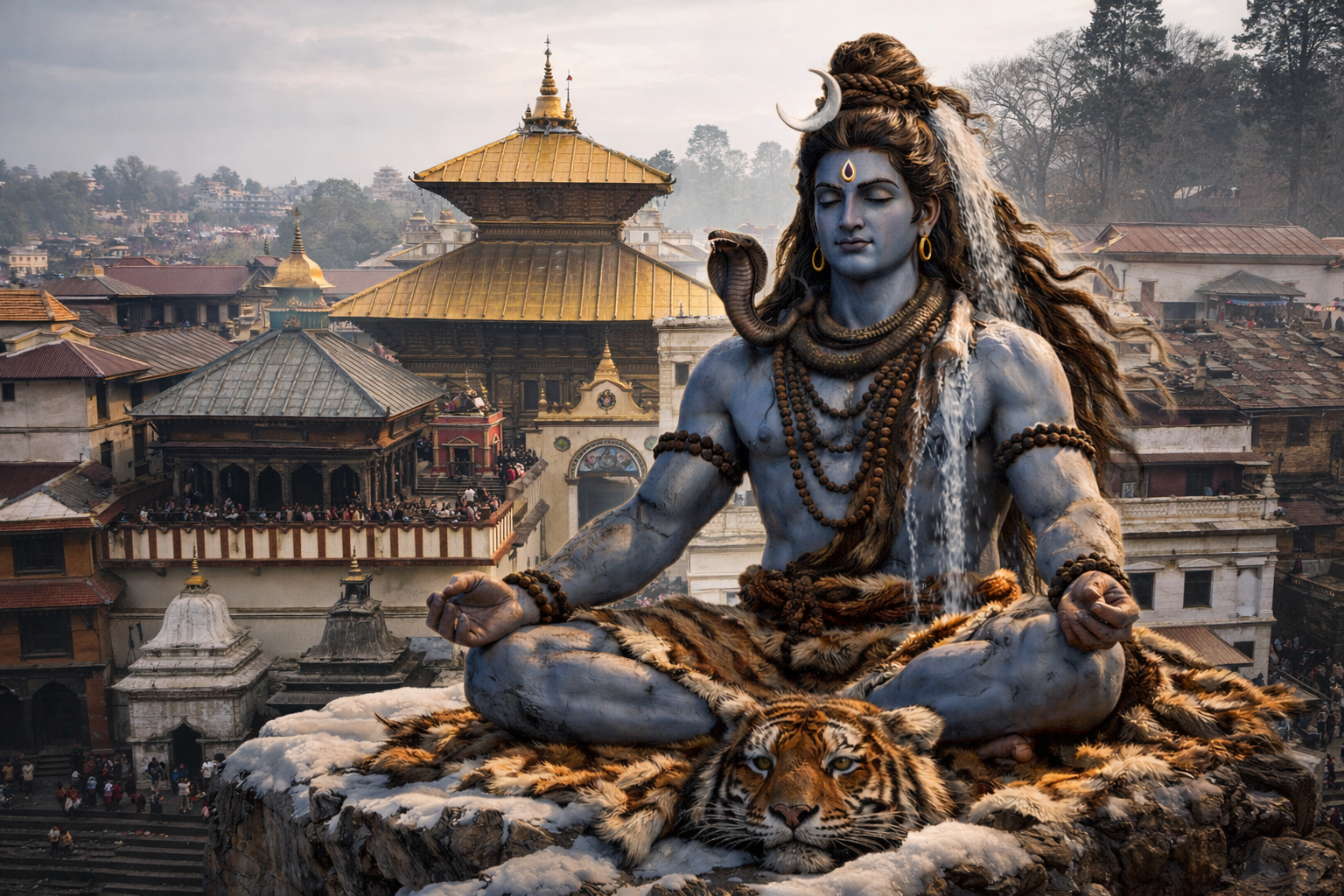
Mahashivaratri, meaning “The Great Night of Shiva,” is one of the most significant and revered festivals in Hinduism. Celebrated with immense devotion and spiritual fervor, it marks a night dedicated to Lord Shiva, the cosmic dancer, the destroyer of evil, and the ultimate yogi. Millions of devotees worldwide observe this auspicious occasion, but its celebration at the sacred Pashupatinath Temple in Kathmandu, Nepal, holds a unique and profound significance. This blog post delves into the history, legends, spiritual significance, and vibrant rituals that characterize Mahashivaratri, with a special focus on the unparalleled experience of observing Shiva Yatra (pilgrimage) at Pashupatinath.
The Spiritual Significance of Mahashivaratri
Mahashivaratri is not merely a festival; it is a night of deep spiritual introspection, penance, and devotion. It is believed to be the most spiritually potent night of the year for Hindu devotees of Lord Shiva. The festival symbolizes the triumph of light over darkness, knowledge over ignorance, and self-control over desire. It is a time when the awakening of the soul through spiritual realization is most accessible, and devotees seek to cleanse their spirits and awaken their consciousness.
During this night, the cosmic energy is said to be at its peak, offering a unique opportunity for yogis and spiritual practitioners to meditate deeply and release their egos. The union of Shiva with Shakti, the divine feminine energy, is also celebrated, representing the balance between these two fundamental forces of the universe.
Legends Behind the Great Night
Several compelling legends explain the profound importance of Mahashivaratri, each adding a layer of spiritual depth to the celebration:
1. The Marriage of Shiva and Parvati
One of the most widely accepted legends states that Mahashivaratri is the auspicious night when Lord Shiva married Goddess Parvati. Parvati, through years of intense penance and unwavering devotion, proved her love and purity to Shiva. Their divine union signifies the eternal bond between Purusha (consciousness) and Prakriti (nature), and the harmony of masculine and feminine energies in the cosmos. Many devotees, especially women, observe fasts and prayers on this day, seeking a husband like Shiva and praying for marital bliss and well-being.
2. The Cosmic Dance (Tandava)
Another powerful legend associates Mahashivaratri with Lord Shiva’s performance of the ‘Tandava,’ his cosmic dance of creation, preservation, and destruction. This dance is not merely an act of destruction but a purposeful cycle that clears away the old to make way for the new. It illustrates the continuous process of cosmic evolution and dissolution, reminding devotees that destruction is a necessary precursor to creation and renewal. Witnessing or contemplating the Tandava on this night is believed to bring spiritual liberation and understanding of the universe’s cyclical nature.
3. The Story of Samudra Manthan and Neelkantha
Perhaps one of the most dramatic legends involves the ‘Samudra Manthan,’ the churning of the cosmic ocean by gods and demons to obtain the elixir of immortality. During this churning, a deadly poison called ‘Halahala’ emerged, threatening to destroy the entire universe. To save all living beings, Lord Shiva selflessly consumed the poison, holding it in his throat, which turned blue. From this act, he earned the epithet ‘Neelkantha’ (the blue-throated one). Mahashivaratri commemorates this selfless act of sacrifice, symbolizing Shiva’s role as the protector and savior of the universe. Devotees remember his compassion and offer prayers for protection and well-being.
Rituals and Traditions of Mahashivaratri
The observance of Mahashivaratri is marked by a series of rituals and traditions performed with utmost faith and discipline:
Fasting (Vrat)
Fasting is a central aspect of Mahashivaratri. Devotees observe various forms of fasts, ranging from ‘Nirjal Vrat’ (abstaining from both food and water) to consuming only fruits, milk, or a single meal after sunset. The purpose of fasting is to cleanse the body and mind, facilitating focused prayers and meditation. It is believed to purify the devotee and renew their spiritual energy.
Abhishek of Lord Shiva
A significant ritual is the ‘Abhishek’ (ritual bathing) of the Shiva Lingam, a symbolic representation of Lord Shiva. Devotees offer various sacred substances to the Lingam, including:
- Water: Symbolizing purification and spiritual cleansing.
- Milk: Representing purity and nourishment.
- Honey: Signifying the sweetness of devotion and divine blessings.
- Curd: For prosperity and abundance.
- Ghee: For strength and vitality.
- Sugar: For happiness and the removal of bitterness.
- Bel Patra (leaves of the Bael Tree): Highly sacred to Shiva, symbolizing surrender to the divine and the three eyes of Shiva.
- Datura Flowers: Offered to Shiva, believed to please him and grant wishes.
Each offering carries a specific spiritual meaning, and the act of Abhishek is performed with deep reverence, accompanied by the chanting of mantras.
Chanting Powerful Mantras
Throughout the night, devotees engage in continuous chanting of powerful mantras, most notably “Om Namah Shivaya.” This sacred mantra is believed to invoke Lord Shiva’s blessings, purify the mind, and help devotees overcome negative karma. Staying awake all night (Jagarana) for worship and chanting is considered highly meritorious, leading to increased awareness, discipline, and freedom from ignorance.
Mahashivaratri at Pashupatinath Temple, Nepal
The Pashupatinath Temple, a UNESCO World Heritage Site located on the banks of the Bagmati River in Kathmandu, is one of the holiest Hindu temples dedicated to Lord Shiva. During Mahashivaratri, the temple transforms into a vibrant epicenter of devotion, attracting millions of pilgrims from Nepal, India, and across the globe. The celebration at Pashupatinath is an experience unlike any other, characterized by its unique blend of ancient traditions, spiritual intensity, and cultural richness.
The Atmosphere and Preparations
Days before Mahashivaratri, the Pashupatinath complex begins to buzz with activity. Sadhus (Hindu ascetics), many of whom travel from distant lands, converge at the temple. These holy men, often adorned with ash and dreadlocks, are a prominent feature of the celebrations, engaging in meditation, chanting, and sometimes offering blessings. Their presence adds a mystical aura to the festival.
The entire temple area is meticulously prepared. Incense fills the air, devotional songs resonate through the complex, and the continuous ringing of bells creates a mesmerizing symphony of faith. The Government of Nepal recognizes Mahashivaratri as a public holiday, allowing widespread participation in the festivities.
The Shiva Yatri (Pilgrimage) Experience
For pilgrims, undertaking the Shiva Yatri to Pashupatinath on Mahashivaratri is a deeply transformative experience. Devotees often arrive as early as 5 AM to secure a place in the long queues, sometimes stretching for kilometers, to enter the main temple and offer prayers to the Shiva Lingam. The journey through these queues is itself an act of devotion and patience.
Throughout the night, ceremonial bathings (Abhisheks) are performed continuously. The most powerful period for offering puja is considered to be Nishita (midnight), a time believed to offer the greatest connection with the spiritual realm. Devotees light oil lamps, offer flowers, fruits, and the sacred Bel Patra to Lord Shiva, seeking his blessings for prosperity, peace, and spiritual liberation.
Cultural Aspects and Community Gathering
Beyond the religious rituals, Mahashivaratri at Pashupatinath is a grand cultural spectacle. Markets surrounding the temple become vibrant hubs of activity, selling religious paraphernalia, food, and souvenirs. Devotional music programs and bhajans (devotional songs) are organized, creating an atmosphere of collective spiritual ecstasy. Families gather, sharing meals and participating in the festivities together, reinforcing community bonds.
A unique aspect of the celebration in Nepal is the presence of the bamboo-pole-swing tradition, which forms a part of the pilgrimage for some. The festival is a convergence of spiritual, cultural, and community gathering, showcasing the rich tapestry of Nepali Hindu traditions.
Environmental Awareness
With millions of devotees converging at Pashupatinath, environmental awareness has become an increasingly important aspect of the celebrations. Devotees are encouraged to avoid plastic waste, maintain the cleanliness of the temple premises, and respect the sacred spaces. Efforts are made to ensure that the celebrations are sustainable and that the sanctity of the Bagmati River and its surroundings is preserved for future generations.
Observing Mahashivaratri at Home
For those unable to make the pilgrimage to Pashupatinath or other temples, Mahashivaratri can still be observed with profound devotion at home. Simple yet sincere rituals can create a powerful spiritual atmosphere:
- Morning Rituals: Wake up before sunrise, bathe, and cleanse your prayer area.
- Altar Setup: Place a Shiva Lingam or a picture of Lord Shiva in your prayer space.
- Offerings: Offer milk, water, and Bel Patra leaves to Lord Shiva.
- Light and Incense: Light a diya (oil lamp) and incense sticks.
- Chanting and Meditation: Chant “Om Namah Shivaya” continuously and meditate at midnight. Even simple devotion, when performed with sincerity, is believed to be incredibly powerful.
Mahashivaratri for the Youth and Modern Devotees
In contemporary Nepal, the younger generation embraces Mahashivaratri in ways that blend tradition with modernity. While many visit temples with friends and participate in traditional bhajan programs, there’s also a growing trend of engaging with the festival through social media, sharing devotional content, and exploring the philosophical aspects of yoga and meditation. The festival continues to be a cross-generational celebration, adapting to modern contexts while retaining its core spiritual essence.
Conclusion
Mahashivaratri is a powerful reminder of Lord Shiva’s transformative energy, his compassion, and his role in the cosmic cycle of creation and destruction. The celebration at Pashupatinath Temple in Nepal offers a unique and immersive experience, where millions unite in devotion, prayer, and spiritual awakening. It is a night to transcend the mundane, connect with the divine, and seek inner peace and liberation. Whether observed at a grand temple or in the quiet solitude of one’s home, Mahashivaratri remains a profound spiritual journey, inviting all to embrace the essence of Shiva and the eternal dance of existence.
References
[1] Happy Mountain Nepal. (2026). Maha Shivaratri 2026: History, Significance, Rituals & Grand Celebration in Nepal. https://happymountainnepal.com/blog/maha-shivaratri-2026-history-significance-rituals-grand-celebration-in-nepal [2] Wikipedia. (n.d.). Maha Shivaratri. https://en.wikipedia.org/wiki/Maha_Shivaratri [3] Britannica. (2026). Maha Shivaratri. https://www.britannica.com/topic/Maha-shivaratri [4] Sadhguru. (n.d.). Why Mahashivratri. https://isha.sadhguru.org/mahashivratri/significance-of-mahashivratri/ [5] Rudralife. (2025). The Story Behind Mahashivratri: Mythology, Science, and Spiritual Awakening in 2025. https://rudralife.com/blog/the-story-behind-mahashivaratri-mythology-science-and-spiritual-awakening-in-2025/ [6] Amazing Nepal Trek. (2025). Maha Shivaratri in Nepal: Rituals, Culture, and Travel Guide. https://www.amazingnepaltrek.com/blog/maha-shivaratri-in-nepal-rituals-culture-and-travel-guide [7] The Himalayan Times. (n.d.). Sadhus throng Pashupatinath Temple for Mahashivaratri. https://thehimalayantimes.com/nepal/sadhus-throng-pashupatinath-temple-for-mahashivaratr